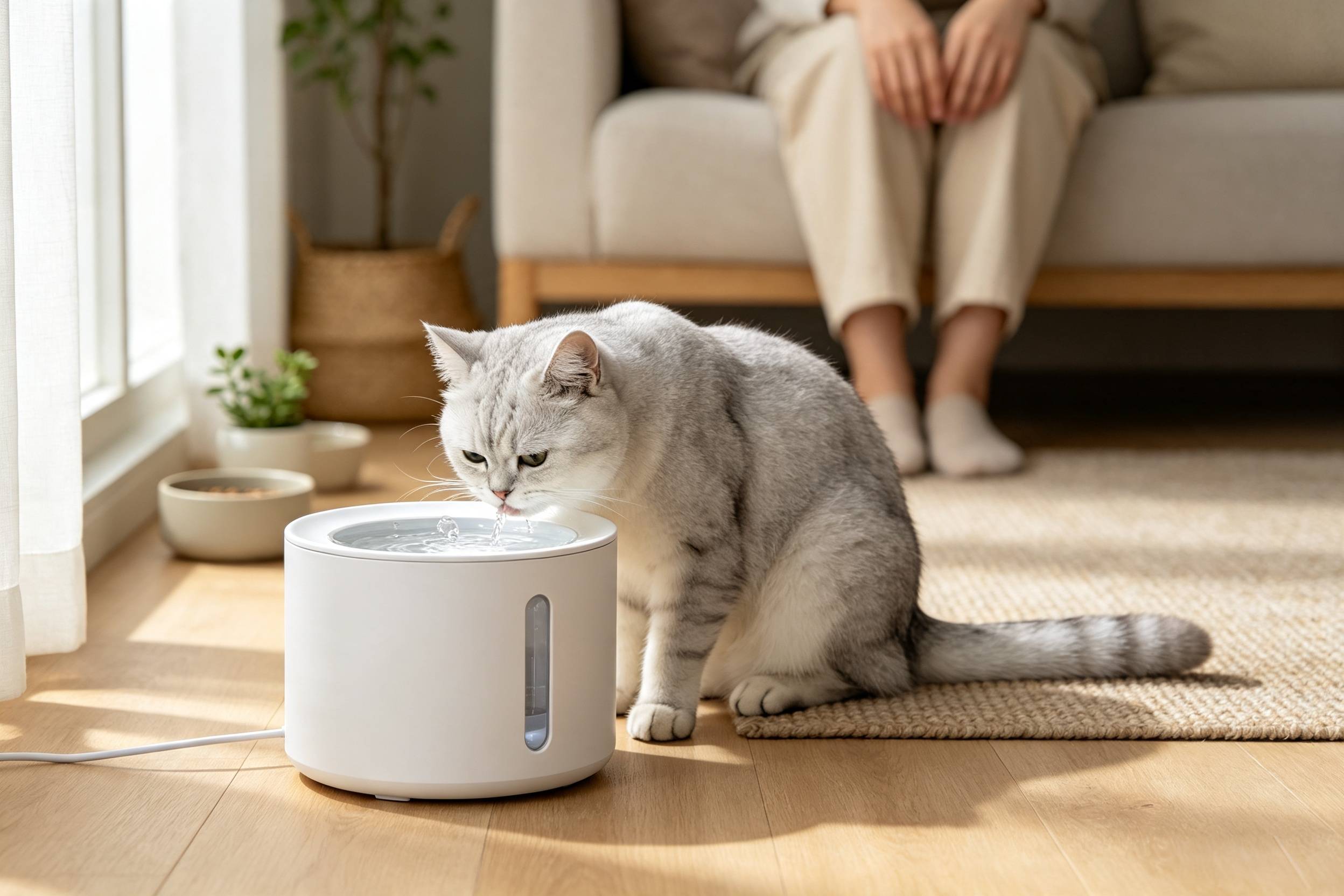
Visual overview
What this product category looks like in real use
Quick verdict
A pet water fountain is one of the most practical upgrades for households with cats and some small dogs, especially when a regular bowl seems easy to ignore. The best fountains are simple to clean, quiet enough for everyday living, and easy for your pet to approach without hesitation.
Top picks at a glance
| Pick | Best for | Why it stands out | Tradeoff |
|---|---|---|---|
| Best overall | Most cats and small dogs | Balanced flow, easy daily use, and approachable design | Still requires weekly upkeep |
| Best for picky cats | Pets that prefer moving water | More visual and sound cues that attract attention | Some cats take time to adjust |
| Best quiet option | Bedrooms and small apartments | Lower pump noise and calmer experience | May need closer water-level monitoring |
| Best easy-clean design | Busy owners | Faster maintenance and fewer awkward corners | Premium convenience may cost more |
| Best value pick | First-time fountain buyers | Lower-risk way to test fountain interest | Simpler filters or fewer features |
Why fountains help some pets drink more
1. Movement attracts attention
Many cats are naturally more curious about moving water than still water. A fountain can make hydration more noticeable throughout the day.
2. Freshness perception
Even when a bowl is clean, some pets seem to prefer the feel of circulating water. That preference can translate into more frequent drinking.
3. Better placement flexibility
A fountain can become a dedicated hydration station in a quiet part of the home, away from litter boxes, food areas, or heavy foot traffic.
What matters most before you buy
1. Cleaning difficulty
This is the biggest long-term factor. If the fountain is awkward to take apart or has too many tight corners, it often gets cleaned less consistently.
2. Noise level
A quiet fountain is easier to live with in apartments, bedrooms, and open-plan spaces. Pump noise often increases when the water level drops too low.
3. Filter replacement routine
Filters help with debris and can improve the day-to-day feel of the water, but they also add recurring maintenance. Make sure you are comfortable with that routine.
4. Pet comfort
Some pets dislike splashing, deep basins, or fountains that feel too tall. The easiest-to-use design is usually the one your pet approaches naturally.
5. Household size
A small one-pet home can use a simpler fountain. Multi-pet homes usually need better capacity and more disciplined cleaning.
Which type should you buy?
Choose the best overall fountain if…
You want a dependable daily upgrade that balances flow, ease of use, and maintenance.
Choose a more attractive-flow fountain if…
Your cat notices moving water but often walks past regular bowls.
Choose a quieter design if…
The fountain will live in a bedroom, studio apartment, or other noise-sensitive area.
Choose an easy-clean model if…
You know routine maintenance is the only way the fountain will stay in use long term.
Choose a value model if…
You want to test whether your pet actually prefers a fountain before spending more.
Common mistakes owners make
Treating the fountain like a self-cleaning device
It is not. The pump, basin, and filter area still need regular washing to stay fresh and safe.
Letting the water level run low
That often increases noise, reduces flow, and can shorten pump life.
Placing it beside the food bowl by default
Some pets drink better when water is placed in its own calm area instead of directly next to food.
Giving up too quickly
Some cats need a few days to investigate the fountain before they start using it normally.
Tips for better results
- Clean the fountain on a regular schedule from the start
- Refill before the water level drops too low
- Put it in a low-stress area with easy access
- Keep a backup water bowl available during the adjustment period
- Watch whether your pet prefers a gentle stream or a calmer pooled surface
FAQ
Are pet water fountains really better than bowls?
For some pets, yes. They can encourage more interest in drinking, but the benefit depends on your pet’s habits and your willingness to maintain the fountain.
Are fountains mainly for cats?
They are most often recommended for cats, but some small dogs also use them happily, especially if they like fresher-feeling water.
How often should a pet fountain be cleaned?
That depends on the design, number of pets, and local water conditions, but regular cleaning is essential for any fountain to stay useful.
What if my pet is scared of the fountain?
Start slowly, keep a regular bowl nearby, and choose a quieter setting or gentler flow if the design allows it.
Final verdict
The best pet water fountain is the one your pet will actually use and that you will actually maintain. If your cat ignores still water or your small dog seems more interested in fresh moving water, a fountain can be a smart everyday upgrade. Just go in with the right expectation: the hydration benefit is real for many pets, but only when the cleaning routine stays consistent.